Sundance ’26: BURN Brings Hyper-Color and Chaos to the NEXT Section

burnOne of the films at Sundance this year that feels like it’s daring people to either love it or walk out is BURN, the new feature from Makoto Nagahisa, who previously made We Are Little Zombies. It’s premiering in the festival’s NEXT section, which feels like exactly where it belongs.
The movie centers on Ju-Ju (played by Nana Mori), a runaway teen who ends up in Tokyo’s Kabukicho district, falling in with a loose group of kids living on the edge. At first, it feels like she’s finally found somewhere to land. That doesn’t last. What starts as freedom slowly turns into something tighter, darker, and harder to escape.

Visually, BURN is doing a lot, neon colors, hyper-stylized shots, constant motion. It’s bright, almost playful on the surface, even when the story underneath is clearly heading somewhere painful. That contrast is the point. The movie looks fun right up until it very much isn’t, and it doesn’t really warn you when the switch happens.

Nagahisa has always been good at capturing youth culture in a way that feels chaotic instead of nostalgic, and BURN seems to push that even further. It’s not trying to explain its characters or soften their choices. It just drops you into their world and lets things unravel.

Director Bong Joon Ho has already weighed in on the film, calling it intense and even frightening, which tracks. This feels like one of those Sundance titles people will be arguing about afterward, not whether it’s good or bad, but whether they were ready for it at all.

BURN premieres January 25, with additional screenings throughout the festival.

Share

Bitter Rice, Giuseppe De Santis’ Neo-Realist Classic, Returns in a New 4K Restoration

bitter-riceGiuseppe De Santis’ Bitter Rice (1949), one of the most provocative and influential films of Italian neorealism, will screen at Film Forum from January 30 through February 5 in a newly restored 4K edition.

Set during planting season in Northern Italy’s Po Valley, Bitter Rice follows a group of rice-field workers known as the mondine, focusing on an earthy laborer played by Silvana Mangano who becomes entangled with a small-time criminal, portrayed by Vittorio Gassman, and his glamorous accomplice, played by Doris Dowling. The film blends social realism with melodrama, pairing its portrait of grueling manual labor with sex, crime, and moral tension.

Filmed on location with real mondine visible in the background, Bitter Rice stands out even within neorealism for its raw physicality and pulp energy. The film was an early international success for producer Dino De Laurentiis, premiered at the 1949 Cannes Film Festival, and earned an Academy Award nomination for Best Story the following year.

De Santis, who came up as a critic and screenwriter before directing, was deeply shaped by anti-Fascist film culture in Italy and by his collaborations with figures like Luchino Visconti and Roberto Rossellini. Bitter Rice reflects that background, merging political consciousness with a visceral, almost sensational style that helped broaden the reach of neorealism beyond strictly austere realism.

The new 4K restoration offers a rare chance to see Bitter Rice with renewed visual clarity, restoring the texture and immediacy of a film that helped redefine postwar European cinema, and remains strikingly modern in its mix of social critique and genre filmmaking.

Share

Wregas Bhanuteja’s Levitating Set for World Premiere in Sundance World Cinema Competition

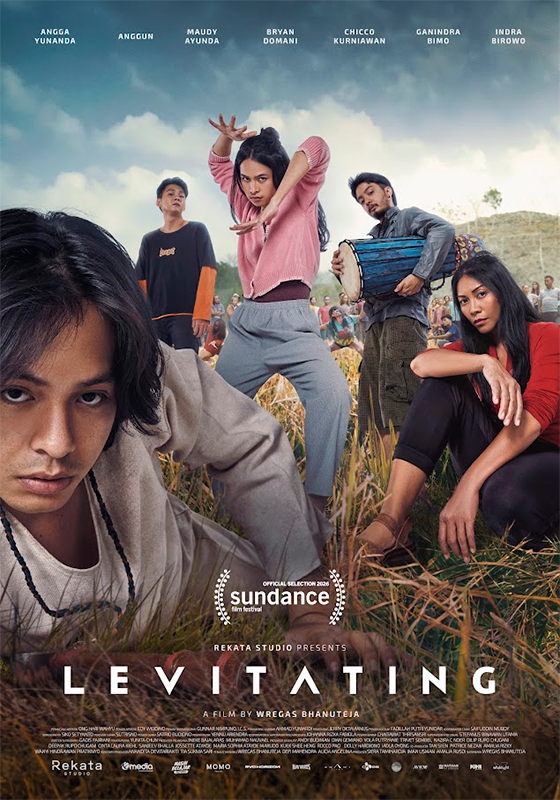
levitatingLevitating (Para Perasuk), the latest film from award-winning Indonesian filmmaker Wregas Bhanuteja (Photocopier, Andragogy), will world premiere in the World Cinema Dramatic Competition at this year’s Sundance Film Festival. A teaser trailer and poster for the film have been released ahead of the festival.

The film stars Angga Yunanda as Bayu, a young man living in Latas Village, a suburban community known for its traditional trance rituals passed down through generations. When the village’s sacred spring—central to its spiritual practices, faces eviction, Bayu sets out to become a lead spirit channeler in hopes of raising funds to save it. His journey forces him to confront the limits of ambition and the deeper meaning of spiritual responsibility.

Levitating features a prominent Indonesian cast including international music icon Anggun in her acting debut, Maudy Ayunda in her first film role since Losmen Bu Broto, as well as Bryan Domani, Chicco Kurniawan, and veteran actor Indra Birowo.

Blending cultural ritual with coming-of-age drama, Levitating continues Bhanuteja’s exploration of identity, belief, and social pressure within contemporary Indonesian life.

Share

Uruguay Selects Don’t You Let Me Go as Its Oscar Submission

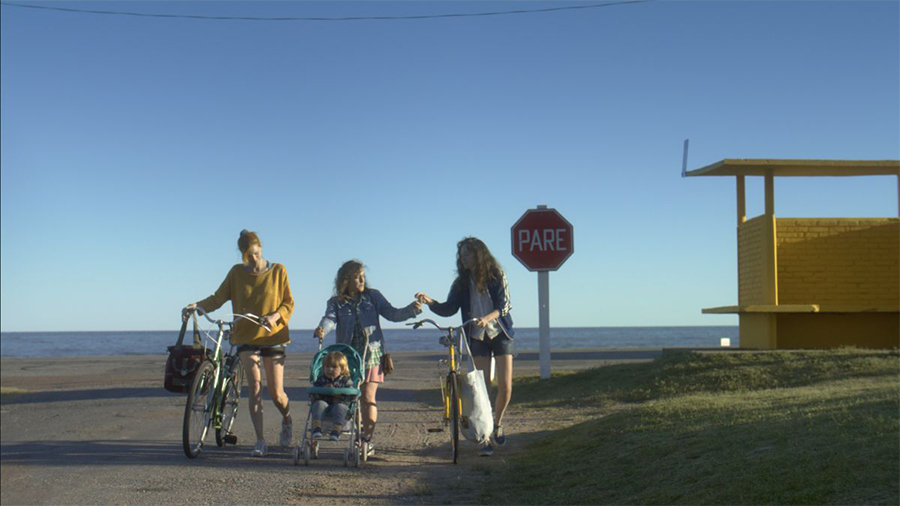
Uruguay has chosen Don’t You Let Me Go (Agarrame fuerte), the latest feature from filmmakers Ana Guevara and Leticia Jorge, as its official entry for Best International Feature at the 98th Academy Awards. The film previously premiered at the Tribeca Festival, where it won the Nora Ephron Award, and later earned a nomination for Best Ibero-American Film at Spain’s Goya Awards.

Produced by Agustina Chiarino’s Bocacha Films, the 74-minute drama centers on Adela, a woman grieving the sudden death of her closest friend. During the funeral, she slips into an otherworldly journey that takes her back a decade, where she reunites with her younger friend group for one final weekend together. Through its mix of intimate realism and gentle fantasy, the film explores memory, loss, and the enduring bonds that shape women’s lives.

Featuring performances by Chiara Hourcade, Victoria Jorge, and Eva Dans, the film continues the longtime collaboration between Guevara, Jorge, and Chiarino, and underscores their focus on female-driven stories both in front of and behind the camera.

International sales are handled by Alpha Violet.

Share

Mexico’s Oscar Entry “We Shall Not Be Moved” Explores Legacy of the 1968 Student Movement

We-Shall-Not-Be-MovedWe Shall Not Be Moved (No nos moverán), Mexico’s official submission for the 98th Academy Awards, will begin its U.S. theatrical run on November 28 at Cinema Village in New York City, presented by Cinema Tropical. The film will then expand to additional cities including Los Angeles, Chicago, Tucson, and Houston.

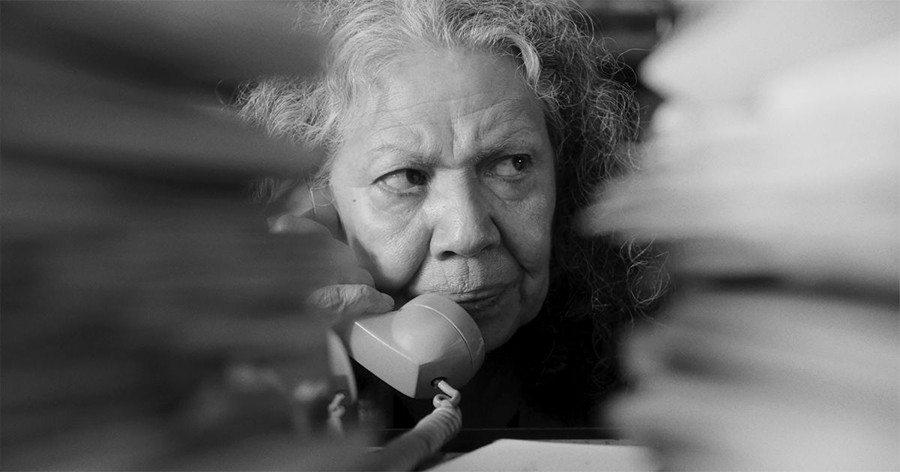
The debut feature by Pierre Saint-Martin Castellanos, the film is a dark dramedy about memory, loss, and the legacy of Mexico’s 1968 student movement, one of the nation’s most significant and tragic historical events. Shot in striking black and white, it stars Luisa Huertas as Socorro, a 67-year-old retired lawyer haunted by her brother’s death during the Tlatelolco massacre. Decades later, she sets out on a dangerous mission to confront the man responsible, forcing her family and herself to reckon with the past.

We Shall Not Be Moved premiered at the Guadalajara International Film Festival, where it won Best Mexican Film and the Audience Award. It went on to receive four Ariel Awards for Best First Feature, Screenplay, Actress, and Breakthrough Actor, and has screened at over 40 international film festivals. The film has also achieved a remarkable 14-week theatrical run in Mexico, the longest of any Mexican film this year, and will represent Mexico at the Goya Awards.

Director Pierre Saint-Martin Castellanos and lead actress Luisa Huertas are available for interviews.

We Shall Not Be Moved is both a personal and political exploration of how the wounds of violence and resistance continue to shape families and national identity in modern Mexico.

Share

Rising Sun Media Brings Yakutian Cinema to Amazon Prime Video with Four Landmark Films

Rising-Sun-MediaFour acclaimed films by Yakutian filmmaker Stepan Burnashev (Black Snow, Our Winter, Cursed Land-Fate, and Aita) are now streaming globally on Amazon Prime Video through Rising Sun Media, marking a milestone for Sakhawood, the independent film movement from Russia’s Sakha Republic in Siberia.

Known for their emotional depth, poetic realism, and Indigenous storytelling, Burnashev’s works are often created on small budgets with local non-professional actors. His films explore survival, identity, and spiritual resilience set against the stark Siberian landscape.

Among the four titles, Aita stands out for its political resonance. It was banned in Russia in 2023 for being “contrary to the principles of the unity of the peoples of Russia,” which Burnashev described as proof of the film’s power to “disturb systems of silence.”

“This is what independent filmmaking is about,” said Nadav Streett of Rising Sun Media. “Creating despite the odds and finding new audiences who are ready to listen to voices from the periphery.”

Founded in 2007 in Los Angeles, Rising Sun Media is known for bringing bold international and independent films to major digital platforms.

Share

Luis Buñuel’s “Viridiana” Returns in New 4K Restoration at Film Forum

ViridianaJanus Films will release a new 4K restoration of Luis Buñuel’s Palme d’Or-winning classic Viridiana (1961), opening November 14 for a one-week engagement at Film Forum in New York City.

Banned in Franco-era Spain and condemned by the Vatican upon release, Viridiana remains one of cinema’s most provocative works. The film follows a novice nun (Silvia Pinal) whose idealistic faith collides with corruption and hypocrisy when she moves in with her uncle, played by Fernando Rey, in a narrative that skewers religious dogma and human weakness.

Winner of the Palme d’Or at the 1961 Cannes Film Festival, the film has long been regarded as one of Buñuel’s masterpieces. Co-written with Julio Alejandro and photographed by José F. Aguayo, the restoration showcases the film’s bold imagery and subversive wit for a new generation of audiences.

Viridiana runs November 14 to 20, 2025, exclusively at Film Forum.

Share