
Paolo Bulgari, Jeweler to Elizabeth Taylor and Hollywood Stars, Dies at 89

The jeweler whose Rome boutique drew Hollywood’s biggest stars in the La Dolce Vita era has died.

Paolo Bulgari died in Rome at 89. His family announced his death on November 21, 2026, calling him “the greatest jeweler of our time.” The cause of death has not been disclosed.

Bulgari was born in Rome in 1937. He was the grandson of Sotirios Voulgaris, a Greek silversmith from the village of Paramythia who fled Ottoman rule, settled in Naples and later opened a jewelry shop in Rome in 1884. Paolo joined the business in 1960, shortly after leaving school. He worked with his father, Giorgio, and specialized in precious gemstones.

The family moved away from the delicate style of the Paris jewelry houses. Instead they used oversized colored gems, rich yellow gold and bold shapes, drawing on ancient Rome and Italy’s artistic heritage. With his brother Nicola and his nephew Francesco Trapani, Bulgari opened stores in New York, Paris, Geneva and Monte Carlo. The company also expanded into watches, perfumes, leather goods and hotels. He served as chairman from 1984.

The brand’s boutique on Via Condotti became a stop for stars in the 1950s and 1960s. Elizabeth Taylor took to Bulgari while filming Cleopatra in Rome. Richard Burton gave her a Bulgari emerald-and-diamond brooch for their engagement in 1962 and a matching emerald necklace as a wedding gift in 1964. Sophia Loren, Audrey Hepburn, Ingrid Bergman and Grace Kelly also wore the brand. Dodi Fayed reportedly gave Diana, Princess of Wales, a Bulgari ring shortly before the couple died in 1997. Zendaya and Anne Hathaway are among its current ambassadors.

In 2011, the family sold a controlling stake to LVMH in a deal valued at more than $5 billion. In 2019, Bulgari and his wife started the Paolo Bulgari Foundation, which supports young people in disadvantaged neighborhoods on the outskirts of Rome through schooling and job training.

His funeral is set for November 23 at the Basilica of Santa Croce in Gerusalemme in Rome.

Share

Adobe Expands Its Creative Agent Across Creative Cloud and Previews MCP Support for Third-Party AI Agents

adobeVideo editors can now ask an AI agent to color-correct a whole sequence in Premiere, and outside AI agents may soon be able to work inside Photoshop.

Adobe announced the changes at Adobe MAX in Miami Beach. The Adobe Creative Agent, which handles multi-step tasks, is now in Premiere, Illustrator, InDesign, After Effects and Frame.io. In Premiere, it can apply effects to every clip in a sequence, track masked subjects and adjust color and exposure across a whole sequence at once.

Adobe also previewed local MCP integrations. They will let users direct third-party AI agents to work in Photoshop, Illustrator, Premiere and After Effects, editing project files directly on the user’s computer. Layers, vectors, bins and sequences stay editable. An agent connected to tools like Google Drive or Slack could pull in a brief, work on the project and share the result.

“The ideas, taste, style and vision that creative professionals bring to their work are what make their work stand out,” said Deepa Subramaniam, Adobe’s vice president of product marketing for Creative Cloud.

The individual apps get new features too. Photoshop adds Relight, which adds and adjusts lighting, and Generative Restyle, which turns prompt-based edits into adjustable sliders. Premiere gets Color Mode, a new color grading system, and a Generative Media Tool that creates video, sound effects and music in the timeline. Lightroom adds Glow and Open Eyes (beta), which fixes blinks in a photo using a reference shot. InDesign adds real-time Co-editing (beta).

Firefly Design (beta) brings raster, vector, motion, 3D and print work onto a single canvas, and it’s included with Creative Cloud. Topaz Labs, which Adobe acquired, released two image enhancement models. Wonder 4 combines upscaling, denoising, deblurring and sharpening, and Image HDR converts standard images to HDR.

Most of the new Creative Cloud features are available now. Firefly Design, Firefly Graph and InDesign Co-editing are in beta. The local MCP integrations will open as a private beta in early 2027.

Share

ARRI Releases Film Lab 1.5 Plugin with Multi-Format Support

ARRI released Film Lab 1.5, a major update to its OpenFX plugin that brings analog film looks to digital images.
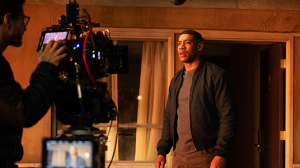
The update adds 8mm, 16mm, 35mm, and 65mm film format options. Previous versions were based only on 35mm film. New parameters give users finer control over grain, halation, and anamorphic character. Processing speed is now up to four times faster.

The company also shared behind-the-scenes insights from recent productions. Cinematographer Johanna Coelho AFC discussed shooting seasons one and two of the Emmy-winning series “The Pitt” with the ALEXA Mini LF at an ARRI event.

ALEXA 35 Live cameras are increasingly used for high-profile live productions. Channel Aid captured Kontra K and the Lufthansa Orchestra live in Hamburg with five ALEXA 35 Live cameras, streaming to more than 200 cinemas with live color grading in the OB van. ARRI’s Multicam System was used for Shakira’s “Las Mujeres Ya No Lloran” world tour show in Madrid and the 2026 Victoria’s Secret Fashion Show in Los Angeles, which streamed live to AMC cinemas for the first time.

Cinematographer Tudor Vladimir Panduru RSC spoke about shooting Cannes Palme d’Or winner “Fjord” with the ALEXA 35 in Norway. Director Cristian Mungiu’s film won the festival’s top prize this year.

ARRI is sponsoring Camerimage 2026 in Toruń, Poland, November 7 through 14.

Share

Sony Rolls Out RIALTO 65 Camera System as VENICE 2 Powers “Lanterns” and “Evil Dead Burn”

Sony’s expanding its Cinema Line with the RIALTO 65 Camera Extension System for the VENICE 2.

The new system pairs a 65mm sensor replacement with an extension setup. Sony tested it in the Arizona desert to see how it handles light, framing, and depth of field at large format scale.

Meanwhile, the VENICE 2 and RIALTO Mini are already on set for HBO’s “Lanterns.” Oscar-nominated cinematographer Florian Hoffmeister shot the opening episodes before handing off to Emmy-nominated DPs Armando Salas and Gregory Middleton. The series follows Hal Jordan as he trains a new Green Lantern, mixing Middle America grit with alien worlds.

Philip Lozano used the VENICE 2 and RIALTO Mini on “Evil Dead Burn,” the sixth feature in the franchise. Director Sébastien Vaniček told Lozano he wanted “the most violent Evil Dead ever done.” Lozano says the camera helped capture fire detail and Vaniček’s handheld style.

Sony also launched the FX5, a full-frame camera that combines RAW recording with a compact body and AI autofocus. Factory shipment has resumed. The company released two new remote control units, the RM-DP5 and RM-DP7, which work as monitors for the FX5, FX3, FX2, and FX30.

Share

Jet2 Partners with Adobe to Build AI-Powered Holiday Planning Tools

ADOBE-JET-2UK tour operator Jet2 is teaming up with Adobe to bring personalized AI features to its 10 million customers.
The multi-year partnership centers on Adobe CX Enterprise Coworker, which uses AI to help Jet2 staff deliver customized travel recommendations at scale. The system will suggest destinations based on each customer’s booking history and preferences, from family resorts to city breaks, and create daily itineraries for travelers already on vacation.

Jet2 will also use Adobe’s content tools to produce on-brand material faster. Adobe Firefly Foundry lets the company build custom AI models trained on its own assets, while Adobe Brand Intelligence keeps outputs consistent across platforms.

A new joint Customer Experience Lab will bring Adobe engineers and Jet2’s digital teams together to test and build new AI services, like smarter ways to match travelers with trips that fit their style.

“Customers know they will always receive a VIP experience when they holiday with us,” said David Hills, Jet2’s chief customer officer. “Working with Adobe will enable us to serve our customers even better, using the power of AI to make every interaction more personal, more relevant, more timely and always helpful.”

Jet2 is the UK’s largest tour operator and third largest airline, flying from 14 UK airports.

Share

Canon’s EOS R8 Mark II Is the Lightest EOS Camera With In-Body Stabilization

Canon-EOS-R8-Mark-II-

Canon-EOS-R8-Mark-II

Canon U.S.A. has announced the EOS R8 Mark II. The company says it’s the lightest EOS camera with In-Body Image Stabilization (IBIS). The body measures roughly 5.17 x 3.54 x 3.13 inches, and its styling borrows from classic Canon camera design.

Inside is a 24.2-megapixel full-frame CMOS sensor, with standard ISO reaching 102400 for low-light shooting. Canon says the core imaging systems come from its top-tier professional models. The 5-axis IBIS works together with lens stabilization and includes a mode that reduces blur at the edges of the frame on wide-angle lenses. Canon has also added a multi-controller.

Autofocus runs on Dual Pixel CMOS AF II. It covers 100% of the frame and tracks people, animals and vehicles. Canon says it tracks subjects more closely than the original EOS R8, and the camera adds a Register people priority feature.

Shooting speed went up too. The electronic shutter fires at up to 40 frames per second. An optional pre-continuous mode captures up to 20 frames before the shutter button is fully pressed. Uninterrupted JPEG bursts are 58% longer than on the original R8, and RAW bursts are 30% longer.

On the video side, the camera records uncropped 4K 60p oversampled from 6K, plus uncropped Full HD at 180p with Slow and Fast Mode. Wi-Fi 6 speeds up wireless transfers. Live streaming works over USB-C or HDMI, or wirelessly through the Canon Camera Connect and Live Switcher Mobile apps.

For newcomers, there’s Scene Intelligent Auto with Creative Assist, 14 SCN modes and 16 color filters, including new Negative Filmtone and Positive Filmtone settings.

Canon also announced new accessories. The EG-E2 Extension Grip attaches with a turn-dial and gives a taller grip and better balance with larger lenses, without blocking the battery or tripod mount. The Speedlite EL-5 Ver.2 flash has a longer communication range than the first version and recycles to full power in 1.2 seconds.

A free Windows app, Dual Pixel 3D Converter, can build a 3D photo, a 3D model without a background, or a 3D video clip from a single image. It works with Dual Pixel RAW images from compatible Canon cameras, and with JPEGs shot on the R8 Mark II that include distance information.

The EOS R8 Mark II body is expected in late October at an estimated $1,899, or $2,099 in a kit with the RF24-50mm F4.5-6.3 IS STM lens. The EG-E2 grip ($99.99) and the Speedlite EL-5 Ver.2 ($379) are also expected in late October.

Share

Sony Updates X-OCN White Paper for the FX5 and Adds a Live Production Color Matching Guide

Filmmakers working with Sony’s RAW format have new reading material, and live broadcast crews now have their own guide.

Sony has published two white papers. One is an update to its X-OCN codec documentation. The other is a new guide to color matching for live production.

X-OCN, short for eXtended tonal range Original Camera Negative, is Sony’s compressed RAW format. It records 16-bit linear data, and Sony says that data preserves detail in skin tones, shadows and highlights.

With the release of the Sony FX5, the X-OCN White Paper has moved to Version 3.0. The update covers the new X-OCN C1 and X-OCN C2 formats. Both produce smaller files, and Sony points to uses like web advertising, promotional video and independent film.

The second paper is aimed at live production. According to Sony, crews covering live events increasingly want cameras that give broadcasts a more cinematic look. The new guide lays out methods for keeping color consistent on those shoots. It focuses on productions that mix Sony’s Live System (HDC) cameras with Cinema Line cameras, and it explains how to adjust Cinema Line cameras to match HDC cameras used as the color reference.

Sony says it will keep updating its documentation as camera and image pipeline technology changes. Both papers are available in a new White Papers and Guides section on the Sony Cine website.

Share

The Odyssey Drives IMAX to Its Highest-Grossing Month Ever, With $257 Million in July

IMAX has been around for more than 50 years, and July 2026 was its biggest month ever.

IMAX took in $257 million at the global box office in July, 47% above its previous monthly record. Most of it came from Christopher Nolan’s The Odyssey, which has earned $221 million in IMAX so far.

The Universal Pictures release made $44.7 million in IMAX in its third weekend. That made it the fastest film in IMAX history to pass $200 million worldwide. It also gave IMAX three straight $50 million-plus global weekends, a first for the company. The Odyssey is the only film to have more than one $40 million-plus global weekend in IMAX.

IMAX screens account for more than 24% of the film’s global box office. In North America, its 443 IMAX locations brought in $22.1 million over the weekend, 43% of the film’s domestic total. Internationally, it earned $22.6 million on 450 IMAX screens and became the highest-grossing IMAX release ever in 24 markets, including Mexico, Italy, Turkey, Saudi Arabia and India.

The film is already IMAX’s highest-grossing collaboration with Nolan and its third-highest-grossing release ever. It had not yet opened in China, Japan or South Korea. The 41 IMAX 70mm Film locations have earned $27.6 million, which works out to about $673,000 per location.

“We are all witness to history,” said IMAX CEO Rich Gelfond.

Pre-sales for future IMAX showtimes are close to $60 million. The Odyssey will stay in IMAX theaters through at least September 17.

Share

CES Innovation Awards Add an Art Tech Category, Created With Christie’s

Generative AI tools, projection mapping installations and blockchain provenance trackers are all eligible for a new award at CES.

The Consumer Technology Association, which owns and produces CES, has added an Art Tech category to the CES Innovation Awards in partnership with Christie’s. The category recognizes technology that changes how art and cultural assets are created, experienced, preserved, owned and exchanged.

“Art has always evolved alongside technology, from the invention of photography to digital media and beyond,” said Kinsey Fabrizio, president and CEO of CTA.

Christie’s helped develop the category and will help put together a panel of expert judges from across the art market. Devang Thakkar, global head of Christie’s Ventures and Innovation Labs, said the category spotlights “innovation that strengthens the vital role of artists in society.”

Entries can be hardware, software or platforms, but technology has to be what sets the product apart, not just a way to deliver it. Submissions fall into five areas:

Creative Tools covers technology for making art, such as generative AI, algorithmic engines and virtual reality environments.

Audience Engagement includes augmented and virtual reality, projection mapping and immersive installations.

Discovery and Context covers AI curation tools, virtual docents and semantic archive search.

Cultural Preservation includes 3D scanning, digital twins and AI-assisted conservation.

Authentication and Commerce covers provenance tracking, blockchain ownership platforms and pricing analytics.

The CES Innovation Awards are an annual competition for design and engineering in consumer tech products. Submissions are open now, and details are at ces.tech.

Share

Tamron’s 12-20mm F2.8 Ultra-Wide Zoom Comes to Sony E-Mount and Nikon Z Mount

A 12mm field of view with an F2.8 aperture at every focal length, in a lens that weighs about 1.25 pounds.

Tamron has launched the 12-20mm F2.8 (Model A084), an ultra-wide zoom for Sony E-mount and Nikon Z mount full-frame mirrorless cameras. The aperture stays at F2.8 across the full zoom range, and Tamron is pitching the lens for astrophotography and interior shooting.

The lens has 17 elements in 12 groups. Among them are an XGM (eXpanded Glass Molded Aspherical) element, three GM aspherical elements and several special elements. Tamron says the design reduces blur and color fringing at the edges of the frame and corrects sagittal coma flare, a common problem in astrophotography.

The Sony E-mount version is 119.3mm (4.7 inches) long and weighs 570g (20.2 ounces). The Nikon Z version is 121.3mm long and weighs 585g. Both have a range of switches and rings for hands-on control.

Autofocus runs on Tamron’s VXD linear motor. The lens focuses as close as 0.18m (7.1 inches) at the 12mm end.

The lens uses a 12-blade circular aperture, and it’s compatible with the TAMRON Lens Utility software for video and stills. The lens hood is built in, so filters go in an integrated rear filter holder. It also has a moisture-resistant build, a fluorine coating, a locking front cap and an included wrapping cloth.

The Sony E-mount version goes on sale July 30, 2026, and the Nikon Z mount version follows on August 27, 2026.

Share
Page 1 of 2
1 2