 Feeld, the dating app focused on nontraditional relationships and sexual exploration, has released its annual RAW 2025 report, offering a data-driven snapshot of how desire, identity, and connection are shifting across cities and generations.
Drawing on user behavior from around the world, the report points to a continued loosening of rigid sexual labels, with heteroflexible emerging as the fastest-growing sexuality on the platform, up nearly 200 percent year over year. The data suggests that users are increasingly comfortable occupying gray areas between established identities rather than committing to fixed definitions.
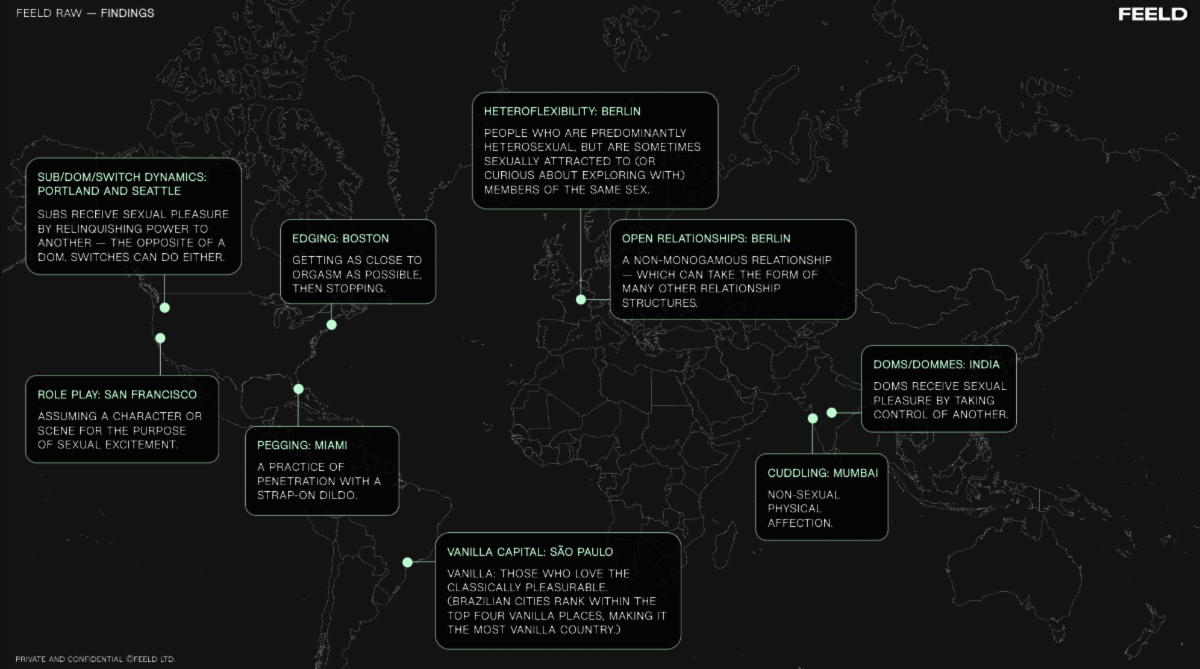
The report also highlights changing attitudes toward intimacy and masculinity, including a sharp rise in interest among cisgender men in practices once considered niche or taboo. According to Feeld’s data, cities such as Miami, Seattle, and Berlin are among those where alternative relationship structures and evolving power dynamics are most visible.
Geography plays a central role in the findings. Urban centers like Berlin and Portland consistently rank high for open relationships and sexual experimentation, while cities in Brazil top the list for more traditional or “vanilla” preferences. The contrast underscores how local culture, infrastructure, and social norms continue to shape how people explore intimacy, even on global digital platforms.
Explore this and more global insights in the full Feeld Raw 2025 report available. here.