
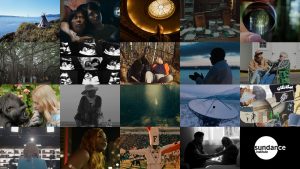
 Nineteen documentary filmmakers from 14 countries are getting some serious financial backing from Sundance Institute’s Documentary Fund. The organization just announced over $1 million in unrestricted grants for nonfiction projects at every stage of production.
The timing matters. The Documentary Film Program turns 25 next year. Since 2002, it’s been a lifeline for indie doc makers, offering money, creative support, and industry connections without the usual strings attached.
This year’s slate spans from development to post-production. Four projects are still in early stages, 12 are actively shooting, and three are in post. The geographic spread is impressive. Almost 65% of proposals came from outside the U.S., with funded projects rooted in Canada, Denmark, France, India, Iran, Mexico, the Netherlands, Norway, Qatar, Romania, Tunisia, the U.K., the U.S., and South Korea.
The themes cut deep. Memory, archives, borders, environmental collapse, generational trauma. Several filmmakers are using science to blur the lines between human and nature.
Notable names include Julian Brave NoiseCat, whose Sugarcane made history as the first Oscar-nominated documentary feature directed by a North American Indigenous filmmaker. Emmy-nominated director Drew Xanthopoulos returns with My Friend the Bear after his Emmy-winning Fathom. David Alvarado’s All Shall Be Saved follows his 2025 Library of Congress prize winner American Pachuco.
Paola Mottura and Kristin Feeley, who run the Documentary Film Program, say the group reflects “the inventive and varied nonfiction work that continues to push the form forward.”
For indie doc makers fighting to get their stories seen, that million bucks isn’t just funding. It’s validation.
